

University College London (UCL) recently investigated the efficiency of various methods to reduce temperatures in the city. They found that painting the roofs of buildings with white or reflective coatings was the most efficient intervention to reduce inner-city temperatures.
Then there are air conditioners. In addition to consuming significant amounts of energy, they are instrumental in raising the outdoor temperature of the inner city. It’s a vicious circle: the more air conditioners used, the higher the ambient temperature, forcing the same air conditioners to work harder to maintain the internal temperature.
Considering that 2023 had the dubious distinction of being the hottest year on record, now is a good time to reflect on architectural features that reduce heat without consuming energy.
Traditional Architectural Design for Passive Cooling Ventilation
People have been using architectural design to cool their homes for thousands of years. Here are a few examples from around the world.
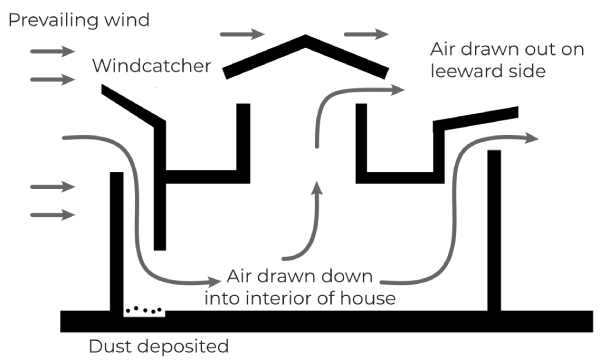
- A windcatcher (known as a bãdgir or malqaf in Iran and Egypt, respectively), is an apt description for the towers with vertical slats found in many Middle Eastern countries. The prevailing winds blow through the slats, drawing up warm internal air and cooling the internal areas.
- The Romans were big on basements, and the San Clemente Basilica in Rome is a prime example of how cool a basement can be, even during heat waves.
- The Egyptians were skilled at passive evaporating techniques to cool their buildings. They discovered that hanging a screen of wetted reeds in the windows cooled the air as it entered the room.
- Courtyards were another popular ancient architectural feature used in several different regions of the world that used shade and greenery to create a cool space.
- Small, recessed windows coupled with thick walls ensured a cooler interior. However, these measures would not suit modern architecture, so let’s investigate other passive cooling strategies to make our lives more comfortable without using energy.
Passive Cooling Strategies for New Construction
As buildings strive towards more energy-saving design, there are some key passive cooling architectural features that play an influential role in providing warmth in winter and reducing heat in the summer without resorting to energy-sapping equipment like air conditioners. Among the critical passive cooling strategies available, the orientation of the building is one of the most efficient.
Orientation
The sun’s apparent movement from the winter to summer solstice plays a significant role in heating a building.
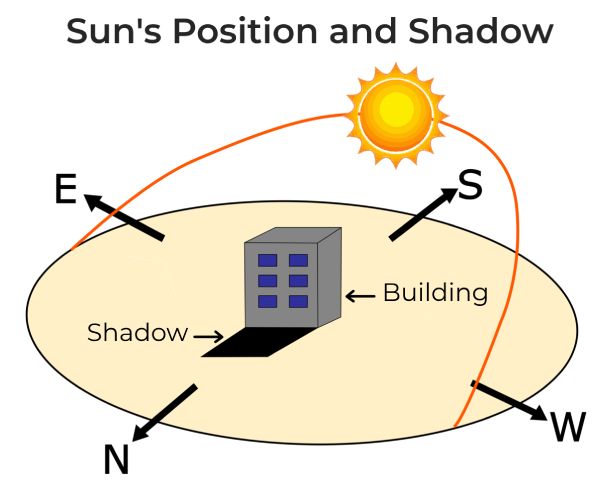
In winter, buildings in the northern hemisphere gather warmth from openings that face south, allowing sunlight in. However, in the hot summer months, the same building should protect its interior by reducing the amount of sunshine entering it.
To do this effectively, rectangular houses with an east-west ridgeline will be more efficient because they maximize their southern exposure. While modern computer-generated diagrams provide accurate design parameters, this concept has its origins in ancient building practices such as those of the Ming Dynasty in China and the Pueblo ruins of Colorado.
Room usage is an important element in enhancing the positive role orientation can play in keeping temperatures comfortable in your home. Rooms frequently used, like the kitchen and living areas, should be on the southern side of the house so they can be warmed by the winter sun. In contrast, garages, storage rooms and other infrequently used rooms should be located on the northern side to buffer the house from the cold winter wind.
Insulation
In summer, we want to keep our interiors cool, and the biggest threat to our comfort is the roof, which is responsible for about thirty percent of the heat invading our interior spaces. While installing efficient ceiling insulation will make things much more bearable internally, applying a reflective coat to the roofing is a more direct solution, which is discussed in the ‘Cool Roofs’ section below.
Regardless, it’s always a good idea to insulate to meet building code requirements in your region. Insulating your walls will help reduce the temperature of your house in the summer, however, if you’re going to pick just one place to insulate, it’s more important to do the roof or attic since the roof receives more sunlight than the walls.
Passive Cooling Ventilation
Passive cooling architecture leans heavily on ancient designs. The fundamental concept is to use the natural property of hot air to rise. Consequently, buildings that allow air to enter at a lower level and circulate before leaving through a higher opening will benefit from the cooling effect that has comforted man since ancient times.
The direction and temperature of prevailing winds are additional factors to consider when establishing the correct orientation of the building. Ancient Egyptians used their knowledge of the prevailing winds to orient building openings to entice the cooling north winds into their buildings.
While specific information on winds and their average temperatures is available from government meteorological departments, the norm is for cold winds to blow from the north and west. In contrast, warmer winds originate in the south for locations in the northern hemisphere.
Passive Cooling Techniques for Existing Buildings
If you’ve ever watched tourists hotfooting it across beach sand heated by the summer sun, you’ll understand the concept of heat absorption. Add to this the conventional city surfaces of asphalt and concrete walkways and the concept of the “urban heat island” is brought sharply into focus.
Cool Roofs
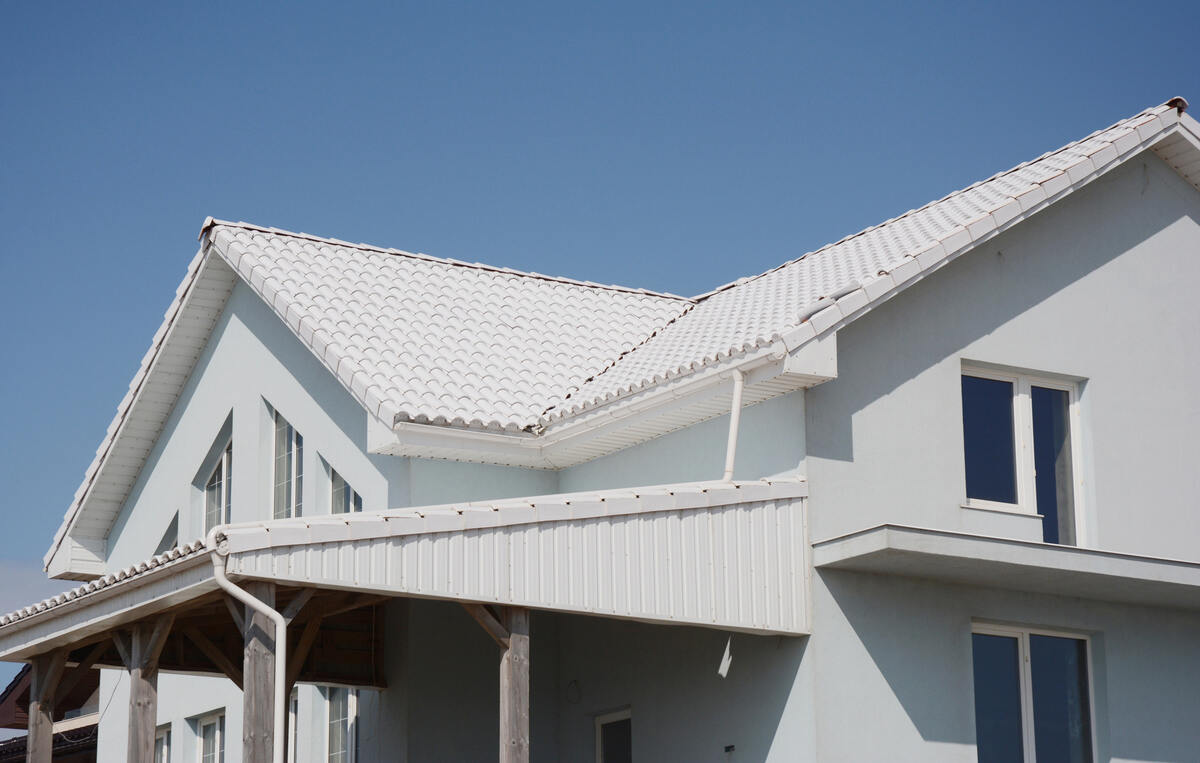
Moving out of the city doesn’t nullify the effect of heat absorption. Suburban asphalt roads and paved driveways do a great job of raising the temperature, and so will your dark roof. Making your roof white or reflective will reduce the ambient temperature and save you the money you would have spent on energy bills.
In UCL’s recent study, the application of a white covering or reflective coating on existing roofs was shown to be more efficient than green living roofs or ground-level vegetation in cooling buildings in central London. In the study, the application of reflective or white roofing would result in a 1.5°C ambient temperature reduction, while green roofs would only result in a 0.5 °C reduction. The inefficiency of the green roofs was further handicapped by the insulation properties of the roof trapping heat in the buildings overnight.
According to The Green Business Lab, the protective coat developed by Purdue University reduces rooftop temperatures by eight degrees. The research team has calculated that the coating’s cooling power equates to about ten kilowatts, which is close to that of conventional air conditioners.
Windows
It’s difficult to change the positions of windows in an existing building, but that doesn’t mean you can’t make them more efficient at keeping the temperature cool.
Sunlight streaming through an early morning window may seem like an invitation to keep the shades open, however, the inevitable result is that the room will quickly get uncomfortably hot.
Blinds and curtains are obvious choices to reduce the sunlight warming up the room, but if you don’t want to lose the view, then applying a window film that reflects the sunlight but remains translucent may be just what you need. My office has early morning sun in summer, and I had to close the curtains during the morning to keep the temperature down until I fitted window film. Now the curtains remain open as the film does a remarkable job of reflecting the sunlight, and I can still watch the waves gently rolling in.
While cross ventilation is efficient at reducing internal temperatures, stack ventilation is efficient at creating a path for warmer air to exit the building through windows placed higher up in the building or sometimes in the roof.
Passive Cooling Using the Garden
Making some changes in the garden can make the house’s internal temperature more comfortable. Trees, especially deciduous trees, are excellent seasonal curtains with a full coverage of leaves in summer when you need them to reduce the sunlight streaming through the windows.
It’s important to keep trees a fair distance from the house for two reasons. First, trees do a good job of reducing wind, which you may want to flow through the house. Second, trees will grow year after year, so make sure you have a good idea of what a fully mature tree will look like before you decide on its position.
In winter, when you want a little sunshine to warm the interior, deciduous trees obligingly shed their leaves. But you have to consider the width of the tree trunk and branches. If they are too wide, the consequent shading that would occur would impact the amount of sunlight entering the house.
Shrubs are another quiver in your bow. Because they are shorter, they are great for blocking the sun in the early morning and late afternoon.
Consider adding a trellis structure to provide a natural cover that will provide additional cooling in summer, and if you use vines that lose their leaves in winter, you will have the best of both worlds.
Buildings that use passive cooling techniques do much more than provide a healthy and comfortable environment. By applying ancient techniques, you may well be able to reduce your energy costs and make a positive contribution to the overall well-being of the planet.

