

Construction and demolition waste (CDW) is the single largest waste stream in Europe, accounting for a colossal 40 percent of total waste produced in the continent. So if you’re contemplating a home renovation, you might now be wondering just what you’re going to do with all the construction debris you’re going to produce.
The good news is that there’s a lot you can do with it. By putting some thought and effort in you can find a home for a good chunk of it then recycle as much as possible of what remains.
This guide will offer you practical strategies for reducing waste in your building and renovation projects. It’s intended as an introduction, but we hope that more seasoned builders will find useful information here, as well. We’ve divided the guide into five sections to reflect a wide range of opportunities to cut waste, from project start to finish.
The first focuses on strategies for deconstruction. The second and third suggest ways to cut down on the new materials and supplies that go into your building project. The fourth is about designing for deconstruction. Finally, the fifth discusses how to minimize waste during the planning and construction phases of a project.
I. Deconstruction

According to this EU study, 83 percent of construction and demolition waste can potentially be prepared for reuse and recycling. Accomplishing this requires radically rethinking how buildings are designed, produced and demolished.
If you need to take down part or all of an existing structure to start your renovation or new build, you can make a significant reduction in the amount of waste associated with your project by choosing to deconstruct the existing building or space rather than demolishing it.
Planning Your Deconstruction
The goal of a deconstruction is to dismantle an existing space carefully enough that the old material can be reclaimed and reused or repurposed. The first step, then, is to determine what is in the space you want to deconstruct.
Create an inventory of the materials you plan on removing, including finishings, wiring and plumbing systems, exterior materials and structural components.
Perform a visual assessment where possible to decide whether the materials are in good enough shape to reuse, or whether you’ll need to repurpose or recycle them instead. Take pictures that you can use to market the materials should you list them for sale (more on that below).
Second, research your local second-hand building supply market. Determine what materials are most in demand and what materials might be most challenging to rehome. This will help you prioritize your deconstruction efforts.
If you have a large space to deconstruct, consider hiring a professional salvage company or a construction company with a track record of deconstruction. This is specialized work and someone with experience will be better able to maximize the materials saved. They will also have access to markets that the average homeowner doesn’t.
You could also consider getting some training in deconstruction yourself. Reach out to salvage organizations, building associations and even neighbourhood groups for training opportunities.
Note: always call in an expert if you suspect hazardous materials are in the mix.
Third, create a schedule for the deconstruction. This is essential, even if you’re soft-stripping (that is, only removing components such as flooring, cabinetry and doors).
The average DIYer can likely do a soft-stripping job individually, by hand. A full structural disassembly, on the other hand, could require coordinating teams of people and equipment, not to mention storage space (and possibly transportation) to keep any valuable structural components protected from weather.
Plan time and resources to clean the components you keep and possibly to reconfigure them to get them ready for reinstallation or repurposing.
Where to Redirect Salvaged Materials
Reusing or repurposing building elements yourself is the greenest way to deconstruct, since no additional energy will be needed to transport the elements away or to bring new ones to the site.
Before you dismantle a building, earmark what you plan on using yourself in your building project and have a place where you can keep the building components you want dry and separate from the components you plan to offload.
You can sell off usable materials you don’t want to a salvage or scrap company, list them individually on online marketplaces, sell them as a lot at auction or to a broker, or have an onsite sale.
The Habitat for Humanity ReStore is a good place to donate used building materials, or you could list them for free on many an online marketplace.
II. Reusing and Repurposing Materials

The materials with the lowest waste footprint are the materials that are already in existence.
Since the building industry conventionally follows a cradle-to-grave approach to materials, nearly everything we put into buildings is, by default, destined for the landfill. And that’s in addition to the waste associated with the resource extraction, processing, manufacture, shipping and installation necessary to make a component functional.
Building sustainably involves rethinking how we engage in supply chains and shifting policies and practices so we can think about used materials not as a waste, but a resource.
While there are major barriers to overcome in order to implement a cradle to cradle approach on an industry-wide level, individual projects that emphasize reclamation over buying new can move the needle towards creating a supply chain that looks more like a loop than a stream.
Where to Find Used Building Materials
It can take time, effort and creativity to track down used building supplies. What you spend in time, however, you often make up in cost, as well as sustainability.
Reuse is becoming more common, so there are plenty of places to find used building components. The wider you cast your net, the better your chances of finding exactly what you need.
Seek out companies that specialize in building deconstruction. If they don’t have what you’re looking for, they might be able to direct you to someone in your area who does. Likewise, local builders might be able to help you source something particular if you’re having trouble finding it.
Building salvage shops and charity shops like Habitat for Humanity’s ReStore are excellent sources for everything from tile to cabinetry to doors to plumbing fixtures. Depending on the store, these will typically be one-offs and smaller amounts of materials rather than large lots.
Architectural salvage yards often specialize in antique and vintage items. If you’re looking for character pieces or high-quality lumber and flooring, these yards are a treasure trove. They’re also excellent places to look if you’re searching for large amounts of trim or flooring that needs to match.
Online marketplaces and reuse networks could offer literally anything in any quantity. Folks who have excess materials after a project, or who are replacing items in their home and prefer not to send their used materials to the landfill, will often list them instead of paying the landfill fees.
Auctions can be useful places to search, as well. Like online marketplaces, an auction might offer anything in any quantity. The trick is to be patient, keep checking upcoming events and be ready to jump on something if it comes up.
Reusing and Repurposing What You Have
The more stuff you keep the less you’ll have to haul away and the less that enters landfill. The pack rats reading this will appreciate knowing that they’d be environmentally justified in holding on to that old kitchen sink. Recovering pack rats, not so much.
But though that old kitchen sink won’t end up in landfill right away, it doesn’t do any good to hold on to a bunch of junk that you’ll never use. A better way to handle this is to think about ways to reuse your stuff elsewhere in your home. If you’re building a garden bar you could put your old kitchen sink to use there or you could use it in a laundry room or art studio.
If it’s a material that you wouldn’t use right away or have a definite plan to use in the near future, perhaps you could repurpose it. Think of the many ways you could repurpose a kitchen sink: as a bird bath, pet wash station, garden planter, water fountain in the garden. If you’re doing a huge reno there are a number of things you could possibly reuse right away that could contribute to your home.
Some components will require light refinishing (turning old dressers into kitchen cabinets, for example). Others will need serious processing (for ex., breaking down old concrete to use as an aggregate for a walkway or for driveway bedding). Still others could involve a complete revisioning of the item’s purpose (turning old windows into a greenhouse, for instance).Have a look at this checklist and try to tick off a few boxes if you can.
Wood – If you’re into woodworking, you can use repurpose your old wood to make something useful like chairs or raised garden beds. If you have hardwood, you can refinish it and use it somewhere else in the house that could benefit from hardwood flooring.
Cabinetry – If you need some extra storage in your garage or storage room you can give your old cabinets a second life elsewhere in your home.
Doors – If you have a nice solid wooden door, even if it’s all beat up, it can be refinished to look great. Or perhaps you could use it as a tabletop or a headboard for a bed – buying wood like that is costly so it’s really worth thinking twice before tossing it.
Windows and mirrors – Remove the glass and voilà you have a nice picture frame. Or you can attach legs to it and use it as a coffee table. If you have a garden, windows are useful for making a cold frame or drying rack for your herbs.
Bricks – Use your old bricks as paving stones in your yard. It’s not hard to do. Just lay down some gravel and sand, flatten it out then lay out the bricks and add some more sand on top to lock them in.
Tiles – Turn your old tiles into a creative backsplash for your kitchen.
Those were just a few of the many reuse and repurposing ideas. Here’s a list of 900+ ideas on Pinterest that you can put to use. The possibilities are endless. It’s a fun way to get creative and can also be really fulfilling to come up with ways to create something useful or artistic out of something that was destined for the dump.
Reusing and repurposing materials that are already on the building site is the least wasteful and energy-intensive way to build and renovate.
Many building components will be the same from project to project (drywall or electrical wiring, for example). If you can carefully take them up during a deconstruction, you can simply reuse them.
Note: always check local building codes to make sure you can reuse or repurpose the materials you have for the function you need.
III. Borrowing and Sharing

For most non-professionals, the way we acquire and use tools and supplies is incredibly wasteful. Our tools sit idle much of the time, and while in buying our own tools we’re paying for the convenience of being able to access each one whenever we need them, we simply don’t need them often enough to make this an efficient and sensible system.
The same is true for supplies. We often don’t need as much of a product as comes in the package, so we end up using a fraction of it and letting the rest sit on a shelf.
A tool library is an excellent solution. It works exactly as the name implies. Tools are donated, often by the community, and then lent out to those same community members, much like library books.
The logistics are often decided by the community itself. Some groups ask for a membership fee, some campaign for donations from local building supply stores, some have dedicated community space – each community library will be unique.
If community spirit isn’t your thing, you can start an informal sharing group with friends, family or neighbours. Look into neighbourhood groups and local non-profits to see if there’s already a tool library in your area. If there isn’t one you can start one yourself. Appropedia offers this page on starting tool libraries, which features several resources to get you going.
IV. Design for Disassembly

Design for Disassembly, or Design for Deconstruction (DfD), is a more holistic way of approaching building and renovation. Its goal is to design buildings with the end of the building’s lifespan in mind, so that the deconstruction process we discussed above can be made simpler and more efficient.
Architect Andreea Cutieru of ArchDaily defines DfD as “the design of buildings to facilitate future changes and dismantlement (in part or whole) for recovery of systems, components and materials, thus ensuring the building can be recycled as efficiently as possible at the end of its lifespan.”
DfD stresses that every component of a building took resources to manufacture, and therefore is itself, as Cutieru says, “a depository of resources, which, rather than ending up in a landfill, should find their way back into the ‘reduce, reuse, recycle’ loop.”
DfD is useful not just for final disassembly, but for renovation work, as well. This mode of construction allows for easier changes and additions to the building, thus cutting down on resource use throughout a building’s operational life.
They offer the following design strategies geared towards making disassembly simpler:
- Maximize clarity and simplicity
- Minimize building complexity
- Minimize different types of materials
- Minimize number of components (fewer, larger elements)
- Minimize number of fasteners (fewer, stronger fasteners)
- Use mechanical fasteners in lieu of sealants and adhesives
- Simplify connections
- Make connections visible/accessible
- Separate building layers or systems
- Disentangle utilities from structure
- Use materials worth recovering
- Minimize toxic materials
- Minimize composite materials
- Use of modular building components/assemblies
- Provide access to components/assemblies (windows, etc)
- Provide access or tie-offs for work at height
- Accessible information:
- Construction drawings & details
- Identification of materials and components
- Structural properties
In addition to the specific technical strategies, there are some larger strategies that those interested in DfD should follow. Cutieru suggests actually creating instructions for the project’s disassembly, including projections for how each building material will be used again.
She also recommends deep research into building materials, such that a builder chooses materials based on whether they will a) stand up to the disassembly process and b) have a good chance of being reused or recycled.
So, now what do we do with the waste that we haven’t reused or repurposed? Next, we’ll explore ways to get rid of it all in ways that do not involve dropping it off at the dump.
Resell for Some Extra Cash
I don’t think “resell” is on the ever-expanding list of Rs, but it should be. The internet has created more marketplaces to sell your old stuff than you’d care to count. And being a global medium, the number of people you can reach is massive. So don’t think that no one would want your junk. If you already have a Facebook or Ebay account you’re one step closer to selling your stuff. Pictures of used goods aren’t all that good so I wouldn’t get hung up on doing an extensive photo shoot for your old stuff. Just click a few quick pics and write up a basic description and you’re good to go.
The great part about going this route is that you get money back for your old things. You also don’t usually have to ship things out, which saves you that cost and hassle. And another potential bonus, especially for high-value items: you can ask the buyer to do the removal or demolition then you work that into the cost. Here’s an example. Marble countertops can cost $50-100 per sq. ft. With a material that costly, you can place an auction to sell your old countertop and you can state that they have to remove the countertop, saving you from having to disassemble it and transport it somewhere to be sold.
It’s not just the big sites that you can sell your used good on. You can sell on auction sites or at local auction houses.
Some of the items you’ll have the most luck selling used include appliances, furniture, countertops, stone tiles, light fixtures and doors. You may not get much for them, but something is better than nothing. And the best part is you don’t have to haul them away, saving you both time and money.
Donate to a Good Cause
Whatever you haven’t been able to reuse or resell, you can donate to local organizations.
Habitat for Humanity ReStores are a great place to donate as they accept a range of building materials that you’d have after a renovation. Aside from that there’s Goodwill, Salvation Army and other local thrift stores and charities that take donations. Some of these organizations will pick up your stuff, some require you to drop them off.
You can also take pictures of your things and list them for free pickup on sites like Facebook Marketplace, Craigslist and Freecycle. Though this option will take longer than dumping things off at a local organization, people will come pick them up from you so you don’t have to do anything other than list them and answer some messages.
Return Unused Building Materials
If you or your contractor overestimated the amount of materials you needed it doesn’t mean you’re stuck with them. Home improvement retailers have fairly generous return policies so you can get a refund, exchange or store credit as long as the products are not damaged or custom made.
Leroy Merlin for example, will generally take products back with proof of purchase within 14 days of buying it or up to 12 month if you are part of their Homy loyalty program.
Recycling and Waste Recovery
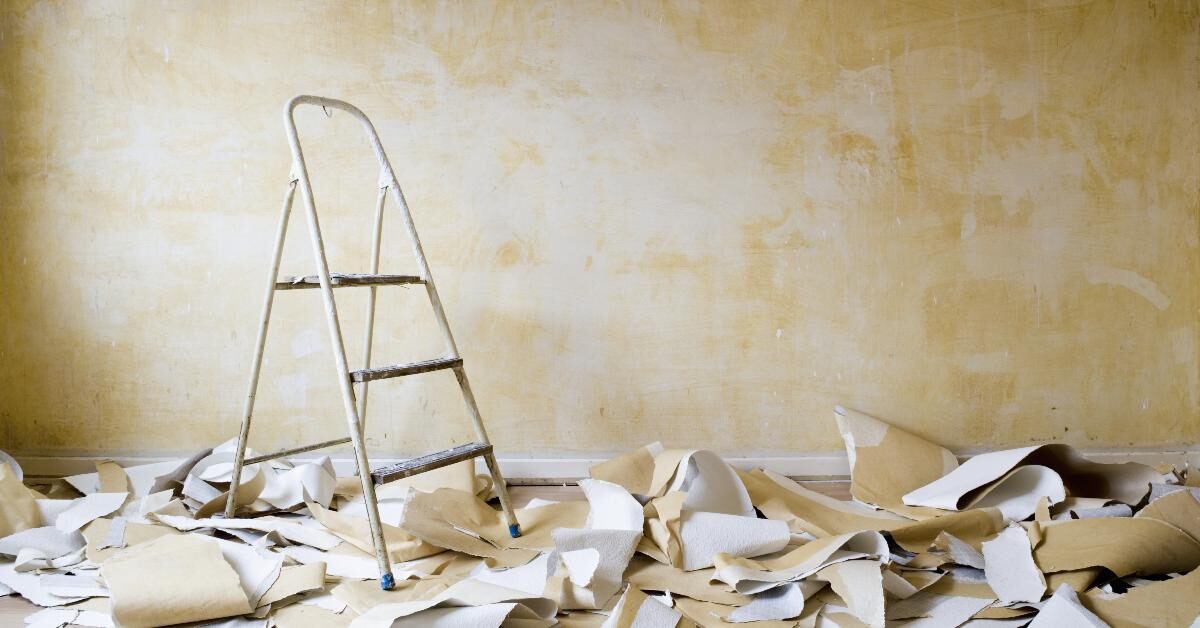
So at this point you’ve reused, resold, donated and returned whatever you possibly could. The house is getting emptier, but you still have a pile of stuff. Now’s when you can get rid of all the rest by recycling then the remaining stuff will go to landfill.
Recycling technology has come a long way in recent years to the point that a good number of building materials can be recycled. That being said there are still a lot of things that cannot be recycled (or not easily recycled).
What is Recyclable and What Isn’t
Here’s a general list of the building materials that can be recycled and those that cannot. It will vary depending on the facilities as some things will be accepted, some won’t.
Recyclable – concrete, metal, wood (untreated lumber, plywood, pallets, OSB, furniture), asphalt, bricks, clear glass, drywall, fiberglass insulation and some types of plastic.
Non-recyclable – hazardous materials that contain asbestos (it was commonly used prior to 1980 in building materials such as ceiling and floor tiles, siding, paint and shingles); wood (treated, painted, stained, engineered, composite or with fasteners); adhesives; plaster; tiles; some types of plastic; coloured glass and glass with coatings of any kind (they’re more likely to be downcycled and used as an aggregate)
Difficult to recycle – PVC and vinyl finishings and components are difficult to recycle because they’re often considered low-value materials and are contaminated by even lower-value adhesives and backings. Your best bet to keep them out of the landfill would be to keep the building element as intact as possible for reuse.
Waste Recovery
The technology is there to turn some of your trash into fuel. Though it’s more environmentally friendly to reuse or repurpose your stuff, converting it to fuel is also a viable option since that fuel will displace a certain amount of non-renewable fossil fuels that would otherwise have to be extracted.
Untreated wood is one particular material that’s a good candidate for waste recovery. It can be converted into biofuel, compost or mulch. If you have a fireplace or wood stove you can also burn it yourself to reduce your furnace usage in the winter.
V. Minimizing Construction Waste

While DfD and material selection can make the most impact on the waste footprint of your building project, you can also cut down on the waste you generate through more efficient building techniques.
The following could help you reduce waste during the planning and construction phases of your project:
- Design your space to fit standard dimensional construction components, rather than trying to make standard components fit your space.
- Consider how much space you really need – smaller spaces create less waste than oversized ones.
- Research modular construction as an alternative to conventional framing techniques.
- Make a list of every material and supply you need, right down to the nails, so you don’t over-purchase.
- Opt for factory-built components such as roof trusses rather than cutting on site.
- Have a dry, covered storage area prepared for materials so they’re not damaged by weather or ground contact.
- Ask your building supplier if you can return packaging to them.
- Plan your cuts to minimize excess.
- Mix concrete, grout and the like in small batches.
- Rent reusable scaffolds rather than buying temporary ones.
- Consider reusable mechanical fasteners rather than adhesives.
- Use leftover pieces of materials for crafts and smaller projects like shelves.
- Remove the paper from leftover or damaged drywall and crush it for use as a soil amendment in clay soils.
- Separate waste materials as you work, keeping those that can be reclaimed in a clean, dry area.
Even if you’re DIYing a small renovation, draw up a waste management strategy and make sure you communicate it to all helpers. This will help keep you accountable and keep everyone on the same page.
