

It would be easy to quote the price per square metre for concrete home construction vis-à-vis the price per square metre for the same size wooden house. But direct comparisons like that fail to capture the complexity and nuance of these choices.
That is because the building and maintenance costs are woven together with the sustainability, durability and longevity of the materials involved in the construction process.
The factors being weighed here are certainly complex. In this article, we will explore these respective approaches, with special attention to cost, sustainability, maintenance, durability and time to build.
The Costs
Though it varies depending on where in Europe, for standard residential construction, the cost difference between wood-frame (especially modern prefabricated systems) and concrete/masonry is often very competitive, potentially ranging from 0 – 10 percent in either direction depending on the specific project, location, and construction method efficiency.
For mass timber projects (like CLT), the upfront costs can still be higher (5 – 25 percent more) than concrete, but this is often offset by faster construction times, lower embodied carbon, and long-term benefits.
Historically, concrete/masonry was often cheaper in many European countries due to established supply chains, readily available skilled labour for these methods, and local material abundance. Though tday, the cost difference is often negligible or very competitive. Modern prefabricated timber construction methods (like timber frame and Cross-Laminated Timber – CLT) have become much more cost-efficient due to faster on-site assembly, which reduces labour costs and project timelines.
Here’s how local factors specifically affect cost:
Labor costs – Where labour for traditional masonry is very efficient and relatively inexpensive, concrete might maintain a slight cost advantage. Where skilled labour for traditional methods is scarce or expensive, prefabrication (often wood-based) gains an advantage.
Material supply chains – Proximity to forests and established timber processing industries (e.g., Scandinavia, Austria, Germany) can make wood more competitive. Proximity to cement plants and aggregate quarries can make concrete competitive.
Building type and scale – For simple, smaller residential homes, the difference might be minimal. For very tall, complex structures, concrete traditionally dominates, though mass timber is challenging this.
As concrete construction requires a greater range of skills and machinery, their cost tends to be higher for domestic projects. In addition, the construction time for timber frame construction tends to be shorter than that of concrete, creating a more favourable cost price using timber. However, concrete building methods such as ‘tilt-up’ walls have reduced construction times.
The initial costs are only one part of the equation; other factors that need to be considered are:
- Concrete is more durable than timber
- Maintenance costs of concrete structures are lower
- Concrete can withstand severe climatic conditions
- Concrete buildings are fire-resistant and do not rot or suffer insect infestation
- Concrete homes can absorb heat, thereby improving the energy efficiency of the building in terms of winter warmth
- Concrete has superior sound absorption properties
Concrete is generally used for larger, multi-storey buildings, while single-storey homes tend to be built using timber frame construction.
Durability
In general, concrete buildings are considered to be two to three times more durable than buildings constructed with wood. However, it isn’t easy to establish a direct comparison as the integrity of the specific materials and type of construction techniques also significantly determine the house’s longevity.
Maintenance costs for a concrete house are mainly limited to preventing moisture absorption. In addition, minor cracks may occasionally occur that require attention. As well, the problems of insect infestation and rot found in houses of wood construction are absent in concrete structures.
Initial Costs
As a heavier product, concrete raises the building cost due to transport charges. It also lengthens the construction process. The comparative per-square-foot costs also depend upon the fluctuation in the respective material prices; for example, the recent spike in lumber prices during the pandemic reduced the variance between building costs using the two materials.
While lumber prices have retreated to previous levels, the cost of concrete has also moderately decreased.
The superior ability of concrete buildings to withstand severe weather has become more significant as climate change plays havoc with weather conditions. This and the reduced fire risk have tended to reduce the insurance costs for concrete houses compared to houses constructed with wood, providing some incentive for choosing concrete as the preferred building material from an insurance perspective.
While traditional concrete building methods suffered from sluggish progress, modern methods like ‘tilt-up’ concrete building can outpace wood frame construction in terms of building speed and material costs.
Thermal Insulation and Energy Efficiency
Concrete’s thermal mass promotes a more uniform temperature range as concrete slowly releases the stored warmth as the temperature decreases, reducing the home’s temperature control cost.
Modern concrete building methods incorporate a thermal insulation layer sandwiched between the interior and exterior concrete layers, making the house extremely energy efficient. The introduction of Insulating Concrete Forms (ICF) has created a concrete-based product with excellent thermal insulation properties.
Proponents of concrete structures highlight the material’s ‘passive survivability’, it’s ability to withstand extreme weather events, and point out how the reduction in energy demands improves occupant comfort.
The costs associated with insulation and air sealing have an impact both on the price of the house and its operating costs. The ability to seal openings efficiently gives concrete an advantage over timber in regards to air sealing.
However, when in comes to insulation, wood wins out with its flexible options for adding insulation. Since concrete walls are rigid, adding insulation is both labour intensive and more costly. Wood is also a much better insulator than concrete. The R-value of plywood is 15 times that of poured concrete (plywood = 1.24 vs concrete = 0.08).
Sustainability
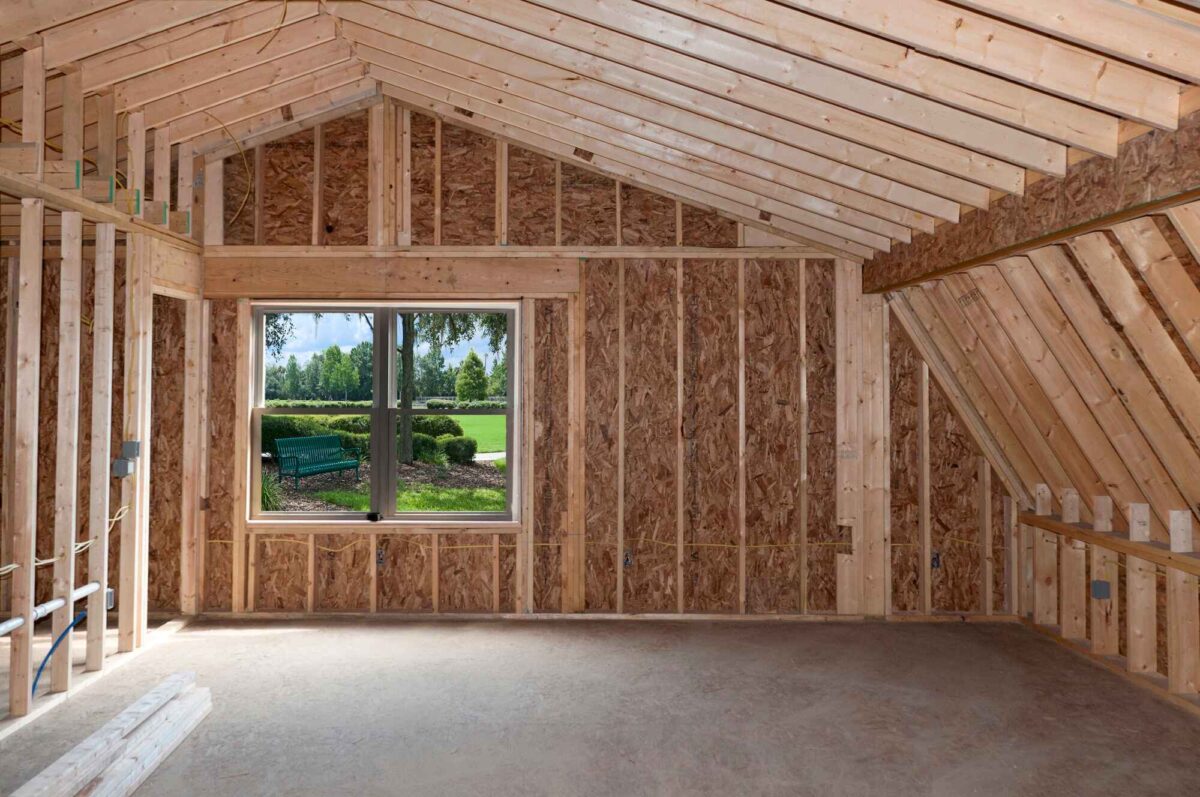
At first glance, timber frame construction should easily be the most sustainable. After all, we are dealing with a natural, renewable product. However, there are several parts to the comparative puzzle.
The primary sustainability factors focus on embodied carbon, durability/lifespan, local availability, presence of a certification (e.g. PEFC or FSC), recycled material content, recyclability, toxicity and building geometry. Additionally, the project’s specific requirements will tend to prescribe the preferred material and a careful assessment of the individual advantages of timber and concrete.
The comparative values of timber and concrete construction and the respective embodied carbon emissions cover a broad spectrum of activities over the building’s lifecycle from resource extraction to disposal.
Concrete is a non-renewable resource and its production is highly energy intensive. Wood, on the other hand, is a renewable resource and the carbon footprint of its production process is much lower. At the end of its life, concrete can be recycled, however, it often is not due to the lack of available recycling facilities in certain locations. Being a natural material, wood can biodegrade over time if it’s not reused or recycled.
There are factors on both sides of the coin that can make both of them more or less sustainable. New types of low-carbon concrete mixes promise a much lower carbon footprint. Forestry practices can determine the sustainability of wood – if the timber comes from responsibly managed forests it’s a lot different than if it comes from old growth forests.
In addition, wider issues such as biodiversity, health and well-being of the building occupants during construction and occupation, and the broader social value are all important considerations that contribute to the final selection decision.
The Pros and Cons
Building with Wood
| Pros | Cons |
|---|---|
| Raw material is readily accessible | Wood is vulnerable to fire |
| Cheaper material costs | Requires acoustic insulation |
| Biodegradable, renewable resource | Prone to rot |
| Lightweight | Insect infestation |
| Easily transportable | High maintenance costs |
| Versatile | Relatively quick structural depreciation |
| Machinable | Susceptible to mould and dry rot |
Building with Concrete
| Pros | Cons |
|---|---|
| Good acoustic insulation | Initial building costs are higher |
| Very durable | Transport is expensive because of the weight |
| Low maintenance | Less versatile than timber frame construction |
| Positive effect on heating and cooling bills | Slower construction speeds with most construction techniques |
| Does not burn | Higher labour costs |
| Resistant to wind and water damage | Efflorescence (the appearance of salt deposits on the surface) can be a problem but is normally temporary |
| Does not rot |
Alternative Building Methods
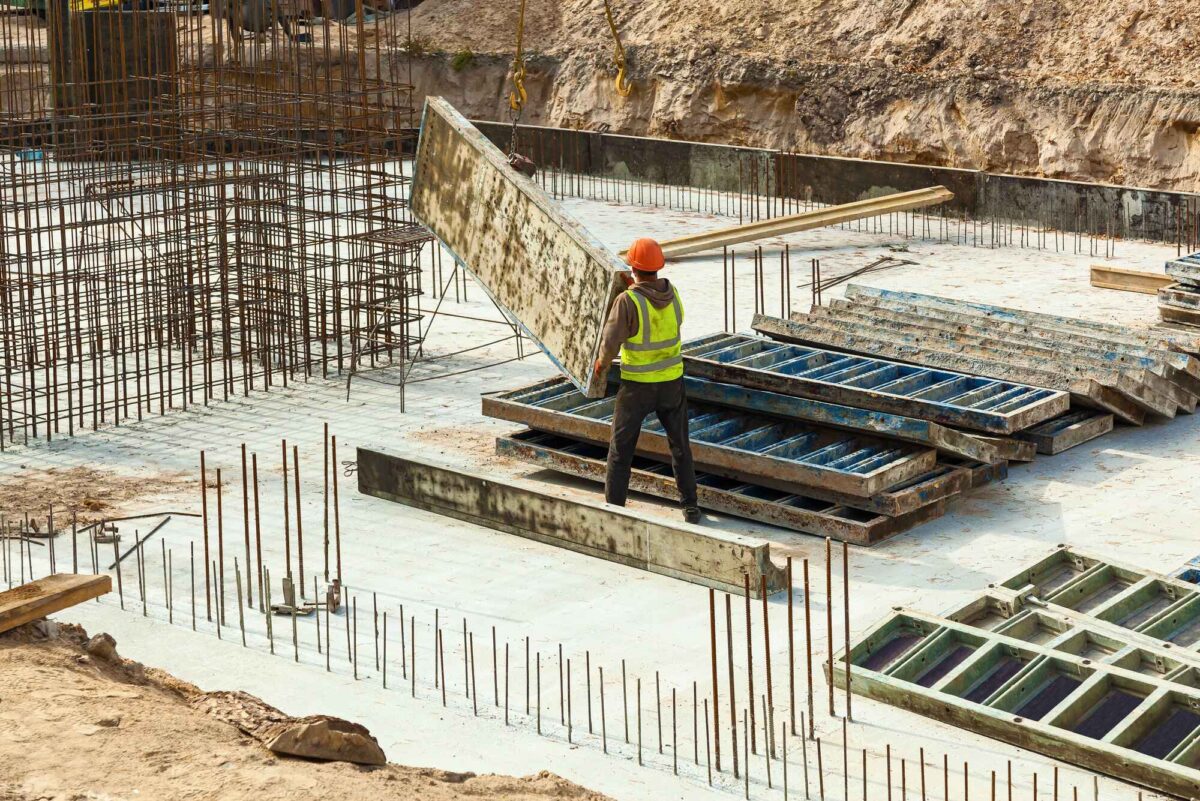
Tilt-up concrete construction, where concrete panels are cast on-site horizontally and then tilted vertically into position, offers a combination of speed and competitive pricing.
Manufacturers of Insulated Concrete Form (ICF) houses too maintain that the ICF building process has substantial advantages over traditional timber frame construction. These advantages include a competitive pricing structure, lower energy costs and greater durability.
Here are some price comparisons for the different materials.
| Construction System | Average Turnkey Cost (€/m²) |
|---|---|
| Wood-frame Prefab | €1,200 – €1,500 |
| ICF (Insulated Concrete Form) | €1,300 – €1,600 |
| Tilt-up Concrete | €1,400 – €2,000 |
| Traditional Concrete/Brick | €1,400 – €2,500 |
Durability and the Problem of Insurance
Insurance companies have raised the issue of the built environment’s ability to withstand the increased incidence of natural disasters. Wildfires, flooding and windstorms have all increased in frequency in recent years, raising the threat of property destruction. And the effect of global warming is not even across the globe. According to the Copernicus Programme: “Europe is the fastest warming continent, with temperatures rising at around twice the global average rate.”
Increased insurance costs result from this increased risk for homeowners, especially in areas where hurricanes and wildfires can potentially destroy large numbers of buildings. Consequently, in the search for solutions to the problems associated with climate change, the type of building materials used in construction emerged as one of the issues. Here, concrete, because of its durability and resistance to wind and water damage, beats out wood as the preferred building material.
Innovation in concrete technology, both in cost reduction and sustainability, has whittled down the cost difference between timber frame and concrete construction methods, providing customers with more choices within a more competitive market.

